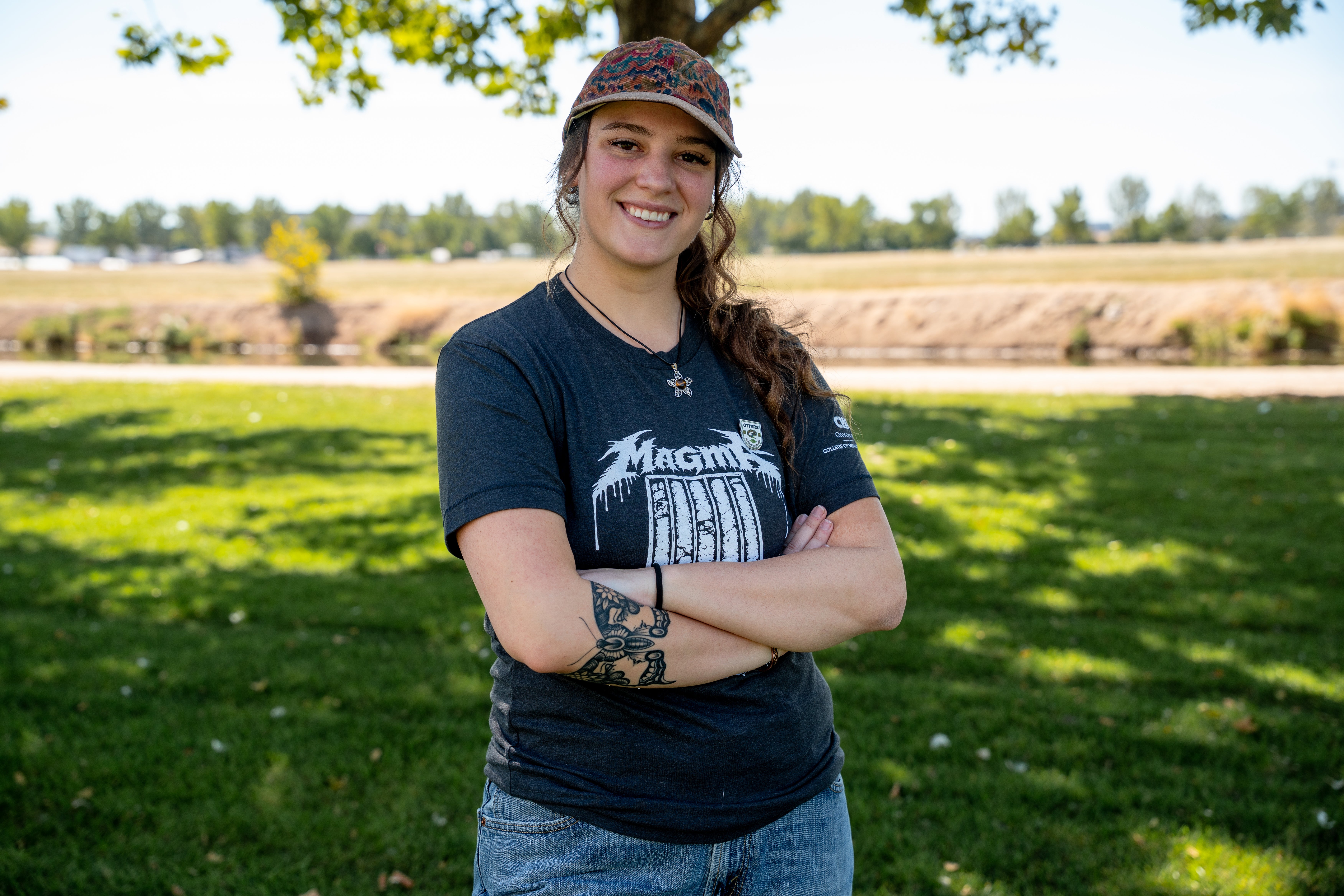
For 14 days at a time, Kyah Retherford’s office this past summer was in the mountains of Valley County.
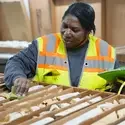
She spent 12-hour shifts working with drill core, taking measurements, and heading out to drill rigs at Perpetua Resources’ Stibnite Gold Project. When the workday ended, there was a lake nearby. Then, back to work the next morning.
Before enrolling in the Geosciences program at College of Western Idaho (CWI), Retherford would not have pictured herself there.
“I didn't really think about the mining world very much,” Retherford said. “I didn't know very much about it.”
The 26-year-old Idaho native did know she wanted to work outside. She grew up with a love for travel and adventure, found geology and Earth history fascinating and wanted something different from the job she had.
“Working a dead-end job before I started going to CWI, I just didn't feel there was a purpose for what I was doing, so I didn't have any motivation for goals until I started in the Geosciences program,” she said.
Affordability and proximity initially brought Retherford to CWI in Fall 2024. Her experience in the Geosciences program gave her reasons to stay, including the support of Geosciences Professor, Ander Sundell.
“He is an amazing professor and has put forth extra efforts to help me in my career that I never expected from a professor,” Retherford said.
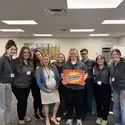
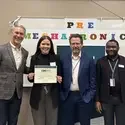
Sundell encouraged Retherford to meet people working in geoscience and mining. She began attending Society for Mining, Metallurgy, and Exploration meetings, talking with industry professionals and getting to know classmates interested in the field.
Those experiences began changing her perception of mining. Retherford learned more about exploration and the environmental requirements involved in mine development and became interested in reclamation, including the work and monitoring involved as a mine closes.
The connections she made through CWI also put her in contact with Perpetua Resources.
Retherford stayed in touch with people at the company for about a year and learned about its internship opportunities. By the time a position became available at Stibnite, the hiring manager already knew her.
“All it took was a phone call, and they knew exactly who I was already and just hired me on the spot,” she said.
Retherford did not need time to consider the offer.
“I did not have to think twice.”
Her plans to relax for the summer were replaced by 14-day shifts and 12-hour workdays. The first hitch came with a practical lesson for the workforce: bring enough clothes. Retherford remembers interns running short on high-visibility shirts, discovering their boots were not comfortable enough, and even double-wearing jeans.
“Because when you're there for 14 days, you don't just get to leave,” she said.
At the drill rigs, Retherford found a familiarity.
“Working up on the actual rigs was very similar to what we did in the core logging course at CWI, and it translated the best from this program to the work environment,” she said.
She also watched her supervisors move between responsibilities throughout the day, using different skills to tackle whatever the site required. The variety helped confirm her interest in exploration.
“It is kind of like branches in a tree, and you can choose whichever limb you want to go to at the time being,” she said. “I find that versatility really attractive.”
The internship also gave Retherford confidence that she belonged in the field, even if she did not have all the answers yet.
Interns arrived at Stibnite with different levels of education. Two were pursuing doctoral degrees, others had bachelor’s degrees, and one had taken a single introductory geology course.
But they all had something in common. They were still learning.
“The PhD students could be just as confused as you are about what type of rock you're looking at,” Retherford said.
Seeing that uncertainty firsthand took away some of the intimidation of entering the field before finishing her education.
“There's no direct answer every time,” she said. “You shouldn't let that discourage you from taking whatever opportunities you can get your hands on.”
Retherford returned from Stibnite with experience on her resume, new friendships and positive feedback from Perpetua. The internship also gave her several areas of geoscience to consider, including exploration, reclamation, drone work, and geographic information systems.
Now in her final semester at CWI, Retherford works as a teaching assistant under Sundell and plans to complete her associate degree before continuing her education at Boise State University.
She may still be exploring which area of geoscience and mining she ultimately wants to pursue, but her time at CWI has given her opportunities to start finding out.
“I'm kind of open to the flow of wherever I end up,” she said. “I'm willing to try it all.”
Looking back, Retherford points to the importance of getting involved, even when she was not sure where it would lead.
“Just get in the van,” she said. “You may not feel like going on a random geology trip or taking time to go to networking meetings, but it will make a world of a difference for your career.”
Turn your curiosity about the Earth into opportunities to explore, learn, and build your future. Discover CWI’s Geosciences and Mining Technician programs and the careers it can help you pursue.