Preparation
To prepare for an emergency on or around campus, individuals are encouraged to:
- Read and become familiar with the information in the Emergency Guidebook below annually.
- Inspect personal work areas for potential hazards.
- Familiarize yourself with building evacuation procedures.
- Participate in emergency drills.
- Develop personal and family preparedness plans.
- Gather supplies for emergencies.
Emergency Communications
When an emergency arises, CWI will provide campus-wide communication to assure safety and minimize loss through the:
- CWI Alerts Messaging System
- CWI website
- Local media
Students, faculty, and staff are asked to:
- Keep their contact information up to date.
- Opt in to receive CWI Alerts.
- Add Campus Security to their contacts.
For media inquiries related to emergencies on campus, please contact Marketing and Communications at 208.562.2222 or communications@cwi.edu.
Emergency Telephones
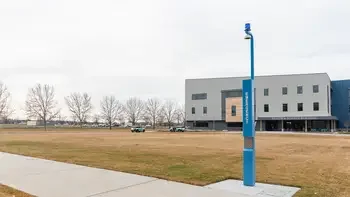
Blue light emergency telephones are located at various campus locations. Become familiar with where these are located. The telephones have two buttons:
- The information button will call Campus Security.
- The emergency button will call 911.
Emergency Guidebook
When an emergency arises on campus or near CWI, follow instructions from Campus Security, building administrators, building leads, floor captains, CWI Alerts, or public first responders.
General Emergencies
In the event of a major of life threatening emergency on campus:
- Call 911, and follow any instructions received.
- State, "This is an emergency," then give the dispatcher the following information:
- Nature of the emergency
- Your name
- Phone number from which you are calling
- Your location
- Do not hang up until you are sure no further information is needed.
- If possible, also notify Campus Security at 208.562.3333.
- Complete an Accident/Incident Report with Risk Management within 24 hours.
CWI recognizes that individuals with disabilities may require assistance with alerting, evacuating, and sheltering in the
event of an emergency. An individual needing or desiring special assistance in an emergency should self-identify
themselves.
- Students should contact Student Disability Services, and employees should contact Human Resources to identify prior to an emergency.
- Once an individual has self-identified, Student Affairs, Human Resources, and Environmental Safety and Health will work with the individual to develop a personal emergency plan that includes specific evacuation procedures, sheltering procedures, and means of communication in the event of an emergency.
- A copy of the plan will be maintained in the students/employee’s personnel file.
Pre-Emergency Preparedness by the Student/Staff Member with a Disability
- Discuss your concerns and options. CWI will assist in the development of your safety plan and engage appropriate campus partners in that support.
- Bring to the attention of your faculty/staff members the extent of assistance that you may need in case of an emergency. It is your responsibility to make your needs known.
- Become familiar with all emergency exits and evacuation routes in the buildings that you frequent.
- If you have difficulty speaking loudly or have a voice/speech impairment, you should carry a device or have other means of attracting attention from others.
Elevators should NOT be used in an evacuation unless instructed by emergency personnel.
- In the event of an evacuation, individuals who are unable to exit the building on their own should remain near the stairwell or the elevator called “Area for Evacuation Assistance.” These areas are marked on building evacuation maps. Emergency personnel will check these areas, for those who are there or trapped.
- Don’t be afraid to let others know when you need assistance.
- Before giving assistance to a person with disabilities, ask the person how you can help.
Mobility Impairment
- A wheelchair evacuation should only be attempted by a trained professional or unless it becomes necessary as a last resort in a life-threatening situation.
- If located on an upper floor, individuals may be assisted to a stairwell landing (Area for Evacuation Assistance) to await evacuation or further instructions from emergency response personnel.
- If individuals can walk with assistance, a “buddy” should accompany the individual.
- Notify emergency response personnel of the location of the person and the type of assistance needed.
- Ensure a clear path of travel for the individual. Move debris or obstacles if possible.
Blindness or Visual Impairment
- The person with a disability should wait for assistance form someone who can act as guide.
- If possible, someone should follow from behind to protect the individual from being pushed down in a crowd.
- Tell the person the nature of the emergency and its location and offer to guide the individual by offering an elbow. Do NOT grasp a visually impaired persons’ arm.
- The person assisting should give verbal instructions as to where they are and advise of any obstacles as they evacuate the building.
- Once at a safe location, orient the individual as to the location and inquire if any further assistance is needed before leaving the location.
Deafness or Hearing Impairment
- Depending on the level of hearing impairment, individuals with impaired hearing may or may not be able to hear an emergency alarm. Most fire alarms under current code also must have a flashing strobe light for that reason.
- An alternative warning technique may be used to gain the attention of such individuals. Using hand gestures, pointing to the flashing light or the use of written notes should be used to describe the emergency.
If the person with a disability has a service animal, let the person with the disability control the animal. Do not separate the animal from the disabled person.
In the event of a medical emergency, responding emergency personnel, in conjunction with the victim, will make a decision as to the best course of treatment and whether or not to transport to a medical facility. If the medical emergency is not urgent, the individual will be encouraged to seek medical assistance and report the incident to CWI within 24 hours.
In case of an accident, injury, or serious illness:
- Assess the situation.
- Determine whether it is an emergency. If so, call 911.
- If it is not an emergency, call Campus Security at 208.562.3333.
- Provide first aid, as needed and per your discretion, using a campus first aid kit.
- If possible, wear personal protective equipment.
- Stay with the person until the proper authorities arrive.
AED
Sudden Cardiac Arrest (SCA) is a medical condition in which the heartbeat stops abruptly and unexpectedly. SCA if fatal if not treated within minutes. Automated External Defibrillators (AED) are available as an optional response to a life-threatening cardiac event.
- An AED is a lightweight, portable device that delivers electric shock through the chest wall to the heart. The shock can potentially stop an irregular heartbeat (arrhythmia) and allow a normal heart rhythm to resume following SCA.
- AEDs are located inside buildings and are within walking distance from any location on campus. Please refer to the building evacuation maps for the locations of the AEDs.
AEDs are equipped with the following:
- Scissors
- Razor
- Cleaning pads
- Rubber Gloves
Considerations prior to operating an AED:
- An AED should not be used on a person w ho is responsive or on infants or children.
- Unresponsive individuals in cardiac arrest will be breathing normally.
- Check for breathing looking at the chest to see if it rises and falls.
- Clothing must be removed and chest hair may need to be shaved from an individual's chest prior to using the AED.
- CPR should be performed, if needed.
After operating an AED:
- If the individual is breathing, you do not need to perform CPR.
- Press the i-button on the AED w hen flashing for coaching on how to perform CPR.
- Leave the AED pads on, and tend to the patient until EMS arrive.
- If another shock is needed, the AED w ill give you step-by-step instructions.
- When EMS arrives, they will take over caring for the patient.
- Be prepared to explain what has happened.
- Hold down the i-button on the AED until it beeps for a report on the number of shocks given and length of time the device was active.
- Once care is transferred to EMS, turn off the AED by pressing and holding down the green on/off button.
- Contact Campus Security at 208.562.3333 to remove the AED from service.
Bodily fluid precautions should be considered during emergency response and first aid treatment. All bodily fluids (blood, vomit, urine, feces, saliva, etc.) have the potential to infect people with diseases such as Hepatitis A, B, and/or C, as well as Human Immunodeficiency Virus (HIV). A “Bodily Fluid Spill Kit” should be located next to or in the first aid kits.
Take special precautions when dealing with bodily fluids:
- Call Campus Security at 208.562.3333 to arrange for safe clean up and disposal procedures.
- Avoid getting another person’s fluids in your eyes, mouth, open sores, or wounds.
- If exposed, rinse the affected area immediately and wash with soap and water.
- Promptly report the exposure to your immediate supervisor.
- If a spill of blood or body fluid contaminates clothing, furniture, or anything else, securely isolate those items to prevent exposure to unknowing persons in the area.
- Secure the area so that others do not become contaminated.
Before a Fire
- Be familiar with the location of fire extinguishers, fire exits, and fire alarm pull station systems.
- Be familiar with your building evacuation maps.
During a Fire
In case of a fire, and if safe to do so:
- Activate the nearest fire alarm at the pull station, or shout “FIRE” as you evacuate the building.
- Call 911 and then Campus Security at 208.562.3333.
- Evacuate the building following the established Building Evacuation Procedures.
- Walk quickly to the nearest marked exit and ask others to do the same.
- Do not use elevators during an emergency evacuation. An elevator may become inoperative and a trap.
- Stay low to the ground, especially if smoke is present.
- Attempt rescue efforts ONLY if there is no immediate danger to you.
- Stop, drop, and roll any person whose clothing has caught fire.
- Smother the flames on a person by wrapping them in a heavy fabric and rolling them on the ground.
- Attempt to extinguish a fire ONLY if there is no immediate danger to you.
- To use a fire extinguisher:
- Pull safety pin from handle.
- Aim at base of the fire(s).
- Squeeze the trigger handle.
- Sweep from side to side.
- To use a fire extinguisher:
- Do not re-enter the building until the “ALL CLEAR” is given by the fire department or Campus Security.
If you become trapped in a building during a fire:
- Stay calm and take steps to protect yourself.
- If possible, move to a room with an outside window.
- Call 911 and notify them of your location and situation. Do this even if you can see fire department personnel from the window.
- Stay where rescuers can see you through the window and wave a light-colored item to attract their attention.
- Stuff clothing, towels, or material around the cracks in the door to help keep smoke out of your refuge.
- Be patient. Rescue of occupants within large structures will take time.
Following a Fire
Once the fire has been identified, extinguished, and confirmed to pose no ongoing danger, an evacuation is not required.
- The affected area must be continuously monitored for 30 minutes to ensure conditions remain safe and that no re‑ignition or secondary hazards occur.
- Submit an Accident/Incident Report to Risk Management.
- Notify Campus Security of the event.
Location, quantity, concentration, and other factors affect how a spill will be handled. All laboratory personnel should be prepared to assist with hazardous material spills within the building and their area. Steps should be taken to restrain all chemical containers and gas cylinders against the effects of a natural disaster. They should also be familiar with the provision of the chemical hygiene plan.
In the event of an unknown hazardous material spill:
- Alert others in the area about the spill tell them to leave the area for a small spill or leave the building for a large spill.
- If you are not trained in responding to chemical spills, leave the area.
- Close off the area as much as possible to avoid any exposure.
- Notify Campus Security at 208.562.3333 and provide the following:
- Location of the spill.
- Name and type of chemical, if possible.
- Quantity of chemical, if possible.
- Extent of the problem.
- Your name.
- Phone number from which you are calling.
- Your location.
- Notify the lab supervisor who will make the determination of whether or not to call 911.
When notified of an external environmental hazard:
- Follow the shelter in place procedures communicated via the CWI Alerts system.
- Monitor local media, the CWI website, and local media for updates, instructions, and recommended actions.
If a mass evacuation or relocation order is issued, await instructions by emergency responders, and follow the instructions exactly as provided.
- Check for individuals who may be in need of assistance.
- Report injuries to emergency personnel.
In the event of an explosion or similar emergency, take the following action:
- Evacuate the area as soon as it is safe to do so following established Building Evacuation Procedures.
- If evacuation is not possible, immediately take cover under tables, desks, etc., for protection from falling glass or debris.
- If possible, call 911 then Campus Security at 208.562.3333 to advise of your location for rescue.
If you discover a water leak, gas leak, or other major utility failure, call Campus Security at 208.562.3333. Do not attempt to correct the problem on your own. Necessary personnel will be notified for further action.
Electrical or lighting failure
Some buildings may not be equipped with emergency lighting or the emergency lighting may not provide sufficient illumination for safe exiting. It is recommended that you consider keeping a flashlight in your office/work area. Call Campus Security at 208.562.3333 if you need an escort from the building.
Plumbing failure, flood, or water leak
- Cease using all electrical equipment.
- Call Campus Security at 208.562.3333.
- Provide information if you know the source of the leak or discover leaking water.
- Attempt to isolate the area so others do not enter.
Elevator failure
If you become trapped in an elevator, use the emergency telephone or activate the elevator emergency bell within the elevator car. If you hear an elevator bell, please take the following actions:
- Call Campus Security at 208.562.3333.
- Never climb out of an elevator when it is stopped between floors.
- Elevators have mechanical safety brakes that will operate in all situations, even during power failures.
- The activation of an elevator lobby smoke detector will cause building elevators to return non-stop to the main floor and lock with the doors open.
- Never use an elevator to evacuate a building.
CWI is committed to creating and maintaining an environment free from criminal acts and/or violent behavior.
Acts of violence and aggression include verbal or physical actions, whether intentional or reckless, that create fear, apprehension of, or actual bodily harm or threaten the physical safety of a member of our campus community. Examples of such behavior would include:
- Any act which is physically assaulting.
- Behavior or actions that a reasonable person would perceive as having the potential for violence.
- Any act that threatens harm to another person or damage to property.
- Domestic violence, dating violence, stalking, sexual assault, or kidnapping.
Should a violent or criminal act occur:
- Immediately get to a safe place, and call 911 for assistance.
- When it is safe to do so, inform Campus Security at 208.562.3333.
If you see something, say something. If you encounter a situation on campus involving a suspicious activity or person(s) that is not of an emergency nature, notify Campus Security at 208.562.3333 so preventative measures may be taken.
Hostage situations must be carefully surveyed and evaluated. The safety of hostage(s), facility, employees, students, and others is the most important consideration in any hostage situation.
If you are a witness
- Call 911, then Campus Security at 208.562.3333.
- If possible, secure the area.
- Wait for assistance.
- Stay clear of the hostage area.
If you are a hostage
- Remain calm.
- Speak calmly with the hostage-taker.
- Follow the hostage-taker’s instructions.
- Do not antagonize or challenge the hostage-taker.
- Calmly inform the hostage-taker of any special needs of yourself or others.
- Keep a distance between yourself and the hostage-taker, if possible.
- Do not make any sudden moves. Ask permission before moving around.
- Try to keep others calm.
- Speak to others in a calm voice.
- Use time as a tool to defuse the situation.
- Wait for help to arrive.
- Make mental notes of everything you see and hear.
- Do exactly as instructed by rescuers when they arrive. This may include being treated as a suspected hostage-taker, as they sometimes attempt to disguise themselves as hostages. These actions are to protect hostages and ensure everyone is evacuated safely.
The threat of suicide should never be taken lightly. If someone threatens suicide or manifests other self-destructive behaviors, a student, faculty or staff member's reaction and responsiveness could result in a positive crisis resolution.
Successful intervention involves establishing a supportive relationship with the individual.
Ways to help a person who may be suicidal:
- Stay calm.
- Talk openly and freely and ask direct questions about the individual's intention.
- Listen to what is said and treat it seriously.
- Do not argue, debate, or lecture about whether or not suicide is right or wrong.
- Do not promise to keep it a secret.
- Do not offer platitudes or simple answers.
- Do not challenge the individual or use scare tactics.
- Do not leave the individual alone.
- Get help for the individual by contacting the following:
- Call 988, the Idaho Crisis and Suicide Hotline. They will dispatch a mobile crisis team if needed.
- Students: Counseling and Wellness Services
- Employees: Human Resources
If someone threatens or attempts suicide on campus:
- If someone threatens suicide, call 988, the Idaho Crisis and Suicide Hotline, and notify Counseling and Wellness Services or Campus Safety and Security.
- If someone has attempted suicide, immediately call 911, then reach out to Counseling and Wellness Services and Campus Safety and Security.
- DO NOT LEAVE the person alone.
- Try to remove the individual calmly but firmly from immediate means of hurting him/herself.
- If the individual has a weapon, do not try to take it physically or through force. Alert emergency responders.
- Keep the area off limits and isolated until Campus Safety and Security, emergency medical personnel, and/or police arrive.
- Render first aid, if necessary.
- Witnesses should be directed to stay in the area in case police or emergency services personnel need further information.
- Submit a Student of Concern Referral.
All bomb threats must be treated as a serious matter. To ensure the safety of students, faculty, staff, and the general public, bomb threats must be considered real until proven otherwise. In most cases, bomb threats are meant to disrupt normal activities.
If a suspicious object or potential bomb is discovered:
- Do not handle the object.
- Evacuate the area.
- Call 911 from a safe distance then Campus Security at 208.562.3333 to report the incident.
- Provide the location and appearance of the object when reporting.
- Make a list of all people who were in the area when the suspicious item was recognized, and provide the list to Campus Security or the police for follow-up actions.
If a bomb threat has been phoned in, remain calm. Keep the caller talking as long as possible. Ask them the following questions, and record the answers:
- When is the bomb going to explode?
- Where is the bomb located?
- What kind of bomb is it?
- What does it look like?
- Why did you place the bomb?
Gather additional information such as:
- Age and sex of caller.
- Speech pattern, accent, possible nationality, etc.
- Emotional state of caller.
- Any background noise.
If possible, have another person call 911 then Campus Security at 208.562.3333 while you are talking to the caller.
The safety of our campus community is a high priority. CWI will take appropriate action to determine the whereabouts/status of individuals who based upon the facts and circumstances known to the College are determined to be missing. Most missing person reports in a college environment results from individuals changing their routines without informing their friends, colleagues, or family of the change.
Anyone who believes a person is missing should contact the Dean of Students (for students) or Human Resources (for
employees). Every report made to the College will be followed up with an immediate investigation. Campus Safety and Security will assist the Dean of Students or Human Resources as circumstances dictate.
When reporting a possible missing person, the following information should be provided by the reporting party:
- Name and relationship of the person making the report.
- The date, time, and location where the missing person was last seen.
- The general routine or habits of the suspected missing person.
- Any friends, family or coworkers that may have knowledge of the person’s whereabouts.
- The missing person’s cell phone number and any personal email addresses, if known.
Upon notification a person might be missing, CWI will use a number of resources to assist in locating the individual. Once all information is collected and all available leads are followed, CWI may contact the appropriate agency to conduct a welfare check on the individual or open a missing persons case if appropriate. If any indication of foul play is generated during the CWI internal inquiry, the appropriate police agency will be contacted immediately.
A suspicious person is one whose actions, behavior, or words cause another to suspect something is wrong or make you sense a threat or danger to you, someone else, or to facilities.
A dangerous person is anyone who intends to harm him or herself, another person, or the facilities on campus (student, faculty, administrators, staff, and/or authorized visitor) or an unauthorized person. Immediately report suspicious or dangerous persons to Campus Security at 208.562.3333 or, when applicable, call 911.
A college is a diverse environment and should serve as a forum for the expression of views within the limitations of lawful
conduct.
Peaceful, Non-Disruptive Demonstrations
- Contact Campus Security at 208.562.3333.
- Demonstrations of this kind should not be obstructed or provoked.
- Efforts should be made to conduct college business as normally as possible.
Non-Violent, Disruptive Demonstrations
- Contact Campus Security at 208.562.3333.
- The College administration will be responsible for notifying demonstrators disruptive conduct will not be
tolerated. - Demonstrators who persist in the disruptive activity will be notified that their actions may result in disciplinary
action including suspension, expulsion, or possible intervention by Campus Security or local law enforcement. - If the disruptive activities continue, college administration will notify local law enforcement for assistance.
Violent, Disruptive Demonstrations
- In the event of a violent demonstration, where injury to persons or damage to property appears imminent, call 911 then Campus Security at 208.562.3333.
If demonstrators move into a building, do not provoke them in any way. Attempt to secure yourself in an office or classroom. Call Campus Security at 208.562.3333 and be on the lookout for additional information in case a lockdown or lockout is called.
CWI is committed to providing a safe learning/work environment free from violence or threats of violence. CWI will not tolerate any form of violence in the learning/workspace including verbal or physical threats.
A threat is defined as any statement or action which clearly communicates or which a reasonable person would interpret as, a threat or intent to commit an act of violence regardless of the method of communication. CWI has established a Threat Assessment Team to formalize the process by which CWI addresses real and possible threats to students, employees, and/or property.
- If the threat constitutes an emergency involving the imminent threat of bodily harm, the victim should call 911 and Campus Security at 208.562.333 immediately.
- If the threat is not an emergent nature and involves a student, a Student Misconduct Form should be submitted to the Dean of Students.
- If the non-emergent threat involves an employee, Human Resources should be contacted.
CWI will follow recommendations made by the Centers for Disease Control (CDC) and the appropriate health district. CWI will utilize the CWI Alerts Messaging System, CWI webpage, and/or special pandemic dashboards to share information about health hazards, control measures, and the impact they will have on campus operations. Specific pandemic work groups will be established as needed.
Early Stages of a Pandemic
Awareness and training efforts to reinforce key prevention measures to control the spread of disease:
- Monitor campus updates for information on vaccinations, precautions, and policy/procedure changes that result from a flu/pandemic outbreak on campus.
- Wash your hands often with soap and warm water, especially before eating and after you cough or sneeze. If soap and water are not available, use an alcohol-based hand gel.
- Cover your nose and mouth with a tissue when you cough or sneeze. Throw the tissue in the trash after you use it. If a tissue is not available, cough into your shirtsleeve.
- Avoid touching your eyes, nose, or mouth. Germs spread that way.
- Do not share your food, drink, or utensils with others.
- Avoid close contact with sick people. Onset of symptoms can take up to three (3) days after you have been exposed to a virus.
- If you become sick, stay home, and avoid contact with others until you have been symptom free for 24 hours. A mild, lingering cough may occur and, if there are no other flu symptoms, this should not prevent proceeding with your normal activities.
Progression of Pandemic
The campus may institute other procedures to limit the spread of disease such as:
- Social distancing procedures which may include restricting face to face meetings in favor of alternate communication means, restrictions on public gatherings, increase the use of remote delivery of instruction and telecommuting, and other procedures that reduce exposure.
- Travel restrictions and cancellations based on warnings from the U.S. State Department travel advisory system.
- Additional procedures and protocols such as availability of sanitization and protective equipment and supplies, additional sanitization/cleaning protocols for the facility and individuals, and the utilization of contact tracing may be implemented depending upon the effects of the pandemic on the campus community.
- Finally, it may become necessary to suspend campus operations and critical support functions until the threat has passed.
Natural Disasters & Weather
Since earthquake magnitudes cannot be predetermined, everyone must initiate emergency precautions within a few seconds after the initial tremor is felt, assuming the worst possible case. The best protection during an earthquake is to take precautions before it occurs (e.g., secure or remove objects above you that could fall during an earthquake).
During an Earthquake
- Remain calm.
- If indoors:
- Seek refuge under a desk or table or in a doorway and hold on.
- Stay away from windows, shelves, and heavy equipment.
- Do not use elevators. An elevator may become inoperative and a trap.
- If outdoors:
- Move quickly away from buildings, utility poles, overhead wires, and other structures.
- Avoid downed power or utility lines as they may be energized.
- Do not attempt to enter buildings until you are advised to do so by the proper authorities.
- If in an automobile:
- Stop in the safest place available as quickly as safety permits, preferably in an open area away from power lines and trees.
- Stay in the vehicle for the shelter it provides.
After the Initial Shock
- Be prepared for aftershocks. Aftershocks are usually less intense than the main quake, but can cause further structural damage.
- Protect yourself at all times.
- Evaluate the situation. Call 911 for emergency assistance, if necessary.
- Do not use lanterns, torches, lighted cigarettes, or open flames, since gas leaks could be present
- Open windows to ventilate the building. Watch out for broken glass.
- If a fire is caused by the earthquake, implement fire evacuation procedures.
- If anyone has been trapped in elevators or by falling objects, call 911 and Campus Security at 208.562.3333.
- If the structural integrity appears to be deteriorating rapidly, evacuate the building.
Tornadoes are capable of tremendous destruction with wind speeds of 250 miles per hour or more. Damage paths can be in excess of one mile wide and 50 miles long. Tornados may occur with little or no advance warning or siren activation.
A tornado watch is issued when atmospheric conditions are favorable for the formation of tornadoes in a given area. Under these conditions, keep informed by listening for alerts on the radio or television.
A tornado warning indicates that a tornado has been sighted and poses a definite threat to a given area.
Tornado Signs
- Dark, often greenish sky
- Large hail
- Loud roar, similar to a train
- Cloud of debris (the tornado may not be visible)
- Wind becomes calm and still
- Frequent lightning
- Formation near the trailing edge of a storm
Before a Tornado
- Locate an accessible basement or corridor in your building.
- Stay informed through local media sources on days when severe weather is expected.
- Obtain a National Oceanic and Atmospheric Administration (NOAA) weather radio with a warning alarm tone and battery back-up to receive warnings.
- Keep a reliable flashlight in your office/work area.
During a Tornado
- Proceed to the basement of any building that has a basement or sub walk. Position yourself in the safest portion of the area away from glass. Kneel facing a wall, and cover your head.
- In high-rise buildings four stories or more, vacate the top floor and move to a lower floor or to the basement. Position yourself in an interior corridor away from glass. Kneel facing the wall, and cover your head.
- Occupants of wood-frame or brick buildings with wood floors should leave the building and go directly to a more substantial concrete building, preferably with a basement.
- Remain in place until police, fire, or other emergency response officials tell you it is safe to leave or until information is announced through radio or television broadcasts alerting you of safety.
The College will make every attempt to maintain normal operations for the benefit of its students, faculty, and staff. Severe weather conditions may require the College to close for a period of time. The decision to close campus and cancel classes is made by administration based on careful consideration of a variety of factors and conditions.
- Notifications will be sent using the CWI Alerts system which includes notification by email, text, and voice message.
- The information will also be posted on CWI’s website, communicated to the local television and radio stations, and periodically updated.
- The decision to close the College applies to all campuses, off-campus centers, and sites.
- Every effort will be made to ensure decisions on morning closures are communicated by 6:30 a.m., and decisions to close for night classes are communicated by 3:30 p.m.
CWI recognizes every employee and student has his or her unique circumstances associated with weather conditions. Each individual must assume personal responsibility for their safety and use their own judgment regarding whether they should drive to CWI under varying weather conditions.
Emergency Response
CWI has established a RUN, HIDE, FIGHT procedure for responding to an active aggressor situation. This procedure should be utilized by the campus community who may become directly or indirectly involved in this type of situation. Full cooperation is expected during such an occurrence.
Definition
An active aggressor is an individual actively engaged in killing or attempting to kill people in a confined area. In most cases, active aggressors use firearms, and there is no pattern or method to their selection of victims.
Procedure
Active aggressor situations are unpredictable, evolve quickly, and are often over within 5 – 15 minutes. Individuals must be prepared both mentally and physically to deal with an active aggressor situation.
- Call 911.
- When safe to do so, call Campus Security at 208.562.3333.
There are three basic options to protect yourself from an active aggressor situation: RUN, HIDE, or FIGHT. Quickly determine the most reasonable way to protect your own life.
Run
If an escape route is accessible, attempt to evacuate the premises, be sure to:
- Know your surroundings, and have an escape route and plan in mind.
- Evacuate immediately regardless of other's decisions to stay or follow.
- Leave belongings behind.
- Assist others escaping, if possible.
- Prevent individuals from entering the area where the active aggressor may be, and WARN people.
- Keeps hands visible to law enforcement.
- Follow first responders, instructions, police, etc.
- Do not attempt to move wounded individuals.
- Call 911 when conditions are safe.
Hide
If you are unable to escape, find a place to hide. Your hiding place should:
- Be out of the aggressors’ line of sight or view.
- Provide protection if shots are fired in your direction (e.g., closed, and locked door of office or closet).
- Not trap you or restrict options for movement should the situation change.
To help prevent an active aggressor from entering your hiding place:
- Remove the door magnet, pull the door strap, or use the ID access card to lock the doors.
- Barricade the door, if possible, with available items (e.g., heavy furniture, etc.).
If the active aggressor is within your vicinity:
- Lock the door.
- Silence all cell phones, pagers, radios, or other devices.
- Turn off sources of noise such as TVs, radios, etc.
- Conceal yourself behind large objects such as bookcases, desks, etc.
- Remain silent, and limit movement which creates noise.
- Do not evacuate if the fire alarm is activated unless you see a fire, smell smoke, or are directed to do so by emergency responders.
Fight
Take action against the active aggressor and a last resort measure for survival when facing imminent injury or death. Attempt to disrupt and/or incapacitate the active aggressor by:
- Acting aggressively towards the aggressor engaging in physical attack.
- Throwing items or using improvised weapons.
- Yelling.
- Staying committed to your actions. Do not let up until the aggressor is incapacitated or disrupted.
The three actions described above are not meant to be followed is sequential order. Each person must make a decision relevant to the situation and react accordingly.
When Law Enforcement Arrives
Law enforcement's primary purpose is to is to stop the active aggressor as soon as possible. Officers will proceed directly to the area in which the threat was last heard:
- Officers usually will enter the building in teams.
- Officers may wear regular patrol uniforms or external bulletproof vests, Kevlar helmets, and other tactical equipment.
- Officers may be armed with rifles, shotguns, handguns, etc.
- Officers may use oleoresin capsicum spray or tear gas to control the situation.
- Officers may shout commands and may push individuals to the ground for their safety.
How to React
Your attention to law enforcement officers is vital for survival:
- Remain calm, and follow officers’ instructions.
- Put down any handheld items (e.g., bags, backpacks, jackets, etc.).
- Immediately raise hands and spread fingers.
- Always keep hands visible.
- Avoid making quick movements towards officers or grabbing onto them.
- Avoid pointing, screaming, or yelling at officers.
- DO NOT stop and ask officers for directions or help when evacuating.
- Proceed in the direction where officers are entering.
Information to Provide
Accurate and relevant information to law enforcement is vital for active aggressor mitigation and can be provided to on scene police or 911.
- Location of the active aggressor.
- Number of active aggressors.
- Physical description of the active aggressor(s) (e.g., clothing, height, weight, hair color, etc.).
- Number/type of weapons or explosive type devices in the area.
- Number of potential victims at the location.
What to Expect
- Arriving officers will not stop to help injured persons. Their initial response is to stop the active aggressor, so be conscious of this.
- Rescue teams comprised of additional officers and other emergency medical personnel will follow the initial response officers to treat and remove any injured persons. They may call upon able-bodied individuals to assist them in removing the wounded from the premises.
- Once you have reached a safe location or assembly point, you will likely be held in that area by law enforcement until the situation is under control and all witnesses have been identified and questioned.
- Do not leave the area until law enforcement authorities instruct you to do so.
Run, Hide, Fight Active Attacker Training Video
Responsibilities
The Director of Campus Safety and Security is responsible for:
- Providing guidance and oversight to CWI.
- Developing, updating, and reviewing this procedure.
- Providing training.
Communication
- An emergency notification will be sent via CWI Alerts Messaging System to the campus community advising them of the situation and to RUN, HIDE, FIGHT.
- If initiating a lockout or lockdown, notify Campus Security at 208.562.3333 if safe to do so.
- An all clear notification will indicate the emergency situation has been contained.
- A sweep of all buildings will be done to ensure everyone knows the RUN, HIDE, FIGHT status has been lifted. This can be done by:
- First responders
- Campus Security
- Faculty and staff
- Facilities Planning and Management designees
All building evacuations will occur when an alarm sounds continuously and/or upon notification by emergency personnel or a CWI Alerts message. If necessary, activate the building alarm. Be aware of people with disabilities in your area who might require assistance in an emergency evacuation. Building evacuation maps are located on each floor of each building. You should become familiar with their location and content. Be prepared to render assistance, if necessary.
- Do not use elevators during an emergency evacuation. An elevator may become inoperative and a trap.
- When the building evacuation alarm sounds or when you are told to leave by a designated emergency official, walk quickly to the nearest marked exit and ask others to do the same.
- Close, but do not lock, doors as you leave.
- Once you are outside:
- Move clear of the building allowing others to exit.
- Move to your assigned safe assembly area as designated on the evacuation maps, or at least 100 feet from the building.
- Do not block any roads or fire lanes, and stay out of the way of emergency vehicles.
- Do not leave the area without informing the designated building administrator/floor captain.
- Do not return to an evacuated building until advised by emergency personnel.
A lockout is a low-level preventative measure where there exists a low to moderate danger to the campus community. This response would typically occur when there is an external incident that poses a potential threat to the safety of the campus, such as:
- A civil disturbance.
- A crime being committed in the immediate vicinity of the campus.
- Potential for or ongoing violent situation exterior to a campus building.
- External threats to the institution.
A lockdown is a high-level more aggressive security response to an active major/serious situation that poses an imminent threat to public safety. Typically, these threats have already entered or are very near a building perimeter. In addition to the security protocol discussed above under Lockout, the following procedures are to be implemented:
- Seek shelter in interior securable space.
- Lock and/or barricade doors.
- Close window coverings, if any.
- Turn off lights in the room/area.
- Stay calm, quiet, and out of sight.
- Silence cell phones (after calling 911, if it is safe to do so).
- Stay away from windows.
- Remain in the security location until the “All Clear” is given by law enforcement or campus security.
- Do not respond to a fire alarm unless you see flames or smell smoke.
- If you are not able to enter a building because it has already been locked, leave the area immediately and seek a safe location off campus.
Shelter-in-place becomes necessary when external conditions make it unsafe to leave a building but were locking down in a building/classroom is not necessary. Typical types of situations where a shelter-in-place would be activated would include a hazardous material spill or other dangerous event near a building or a severe weather condition.
In cases involving external hazardous material spills:
- Close all windows and doors.
- If possible, close or block all heating and air conditioning vents.
- If available, use tape to seal around windows.
- Use rags, towels, or articles of clothing to seal around doors.
- Call Campus Security at 208.562.3333 for additional guidance.
- Remain in the sheltered area until an “All Clear” is given.
In cases of severe weather:
- Leave doors open.
- Close windows, if so equipped.
- Stay as far away as possible from glass windows or walls.
- Remain inside the building until an “All Clear” is received.
Resources
- Advocates Against Family Violence
- Central District Health
- Clarvida Community Crisis Center
- Idaho Crisis & Suicide Hotline
- Idaho Coalition Against Sexual & Domestic Violence
- Idaho Department of Health & Welfare
- Idaho Department of Environmental Quality
- Intermountain Hospital
- Southwest District Health
- Terry Reilly Health Services
- Western Idaho Community Crisis Center
- Women’s & Children’s Alliance