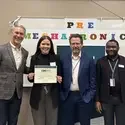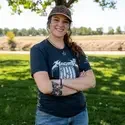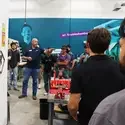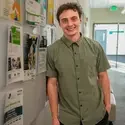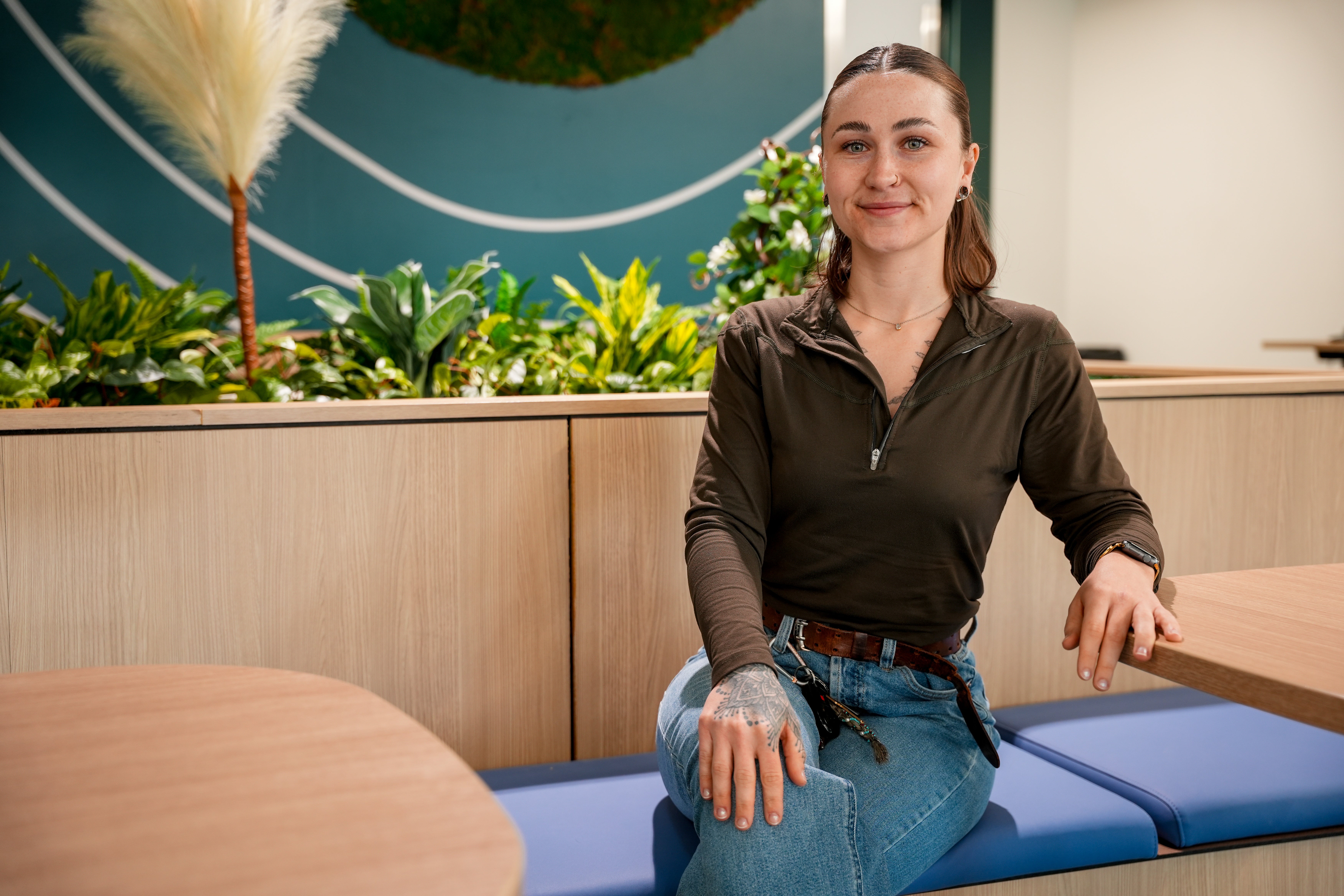
Surrounded by biologists and researchers from across the region, ShanDale Youmans found herself exactly where she hoped to be. At the recent American Fisheries Society conference in Idaho Falls, she sat in on presentations, met professionals in the field, and talked with other Biology students from around Idaho about their experiences.
“It was incredible to be in a room with people who are doing the work I want to do,” Youmans said. “It made me realize this is really the path for me.”
The conference came through connections she made at College of Western Idaho (CWI). The Biology Club and program had put out a call for students to participate in a mentorship with Idaho Fish and Game. Youmans jumped on the opportunity, connecting with a mentor in Jerome who encouraged her to attend the conference. Through that mentorship, she secured a grant to cover travel and lodging — a trip that would have been nearly impossible for a college student supporting herself.
“I couldn’t take a day off of work and pay for travel and a hotel room,” Youmans said. “It wasn’t something I could have done on my own. But I got the grant and it ended up being one of the most valuable experiences I’ve had.”
That experience came after years of figuring out her path.
Growing up in Idaho, Youmans spent weekends rafting, hiking, camping, and rock climbing, developing a love for the outdoors and a curiosity about plants and animals that went beyond the classroom. Her early exposure to Meridian High School’s Professional Technical Center, where she explored large and small animals, equine care, and botany, also sparked her interest in animal science.
Youmans had planned to start college right after graduating in 2017. Financial barriers and other life circumstances delayed her plans, but the time away from school offered valuable perspective. She promised herself she would enroll at CWI when she turned 25, a milestone that would allow her to apply independently through Federal Student Aid (FAFSA) and take control of her educational path.
Between high school and CWI, she worked full time, including a stint at a veterinary clinic, initially thinking that was the direction she wanted her career to take.
“I found out that wasn’t what I wanted to do,” she said. “I realized I wanted to work with animals but not in a clinic. I wanted the outdoors, the unpredictability of nature, to see ecosystems firsthand.”
When she turned 25, Youmans fulfilled her promise and enrolled at CWI in Spring 2025. She initially chose Animal Sciences, but after talking with her advisor, she switched to a Biology degree with an emphasis on natural resources.
“My advisor suggested I pivot to biology because it aligned better with my goals and would make transferring to a university smoother,” Youmans said. “That was a big turning point for me.”
From the start, CWI offered hands-on experiences that shaped her education. Through the Biology Club, she connected with peers who shared her interests, built a network with Idaho Fish and Game and worked with local conservation organizations. She's also participating in projects like managing native species on a plot of land at Lucky Peak.
“It’s one thing to read about animals in a textbook,” she said. “It’s completely different when you’re out there, tracking them, observing behavior, and seeing the ecosystem in action.”
Beyond the classroom, putting herself out there has been key to shaping her path. Attending conferences, joining the Biology Club, and saying “yes” to opportunities with Idaho Fish and Game and the American Fisheries Society has helped her explore internships, field projects, and career paths.
“Being involved on campus has opened doors I didn’t even know existed,” she said. “Getting involved at CWI has made a huge difference. It’s not just about classes, it’s about the people and opportunities you connect with.”
Looking ahead, Youmans plans to stay involved on campus and grow her role in the Biology Club. She is eager to continue taking biology classes at CWI, exploring everything from molecular concepts to ecosystems, and building the skills and knowledge that will prepare her for internships, fieldwork, and eventual transfer to a four-year program in Fish and Wildlife Sciences or Conservation Biology.
But she’s keeping her options open, with interests in fisheries, field research, and habitat management. For now, her focus is on hands-on experiences that will help define her career path.
“I want to get my hands dirty, literally,” she said. “Whether that’s working with fish, wildlife, or conservation projects, the experience will help me figure out what fits.”
Through scholarships, mentorships, and active involvement on campus, Youmans has begun to build both a community and a roadmap for her future. Her love for Idaho’s rivers and trails began in childhood, and at CWI, those interests are transforming into real opportunities and a clear path forward.