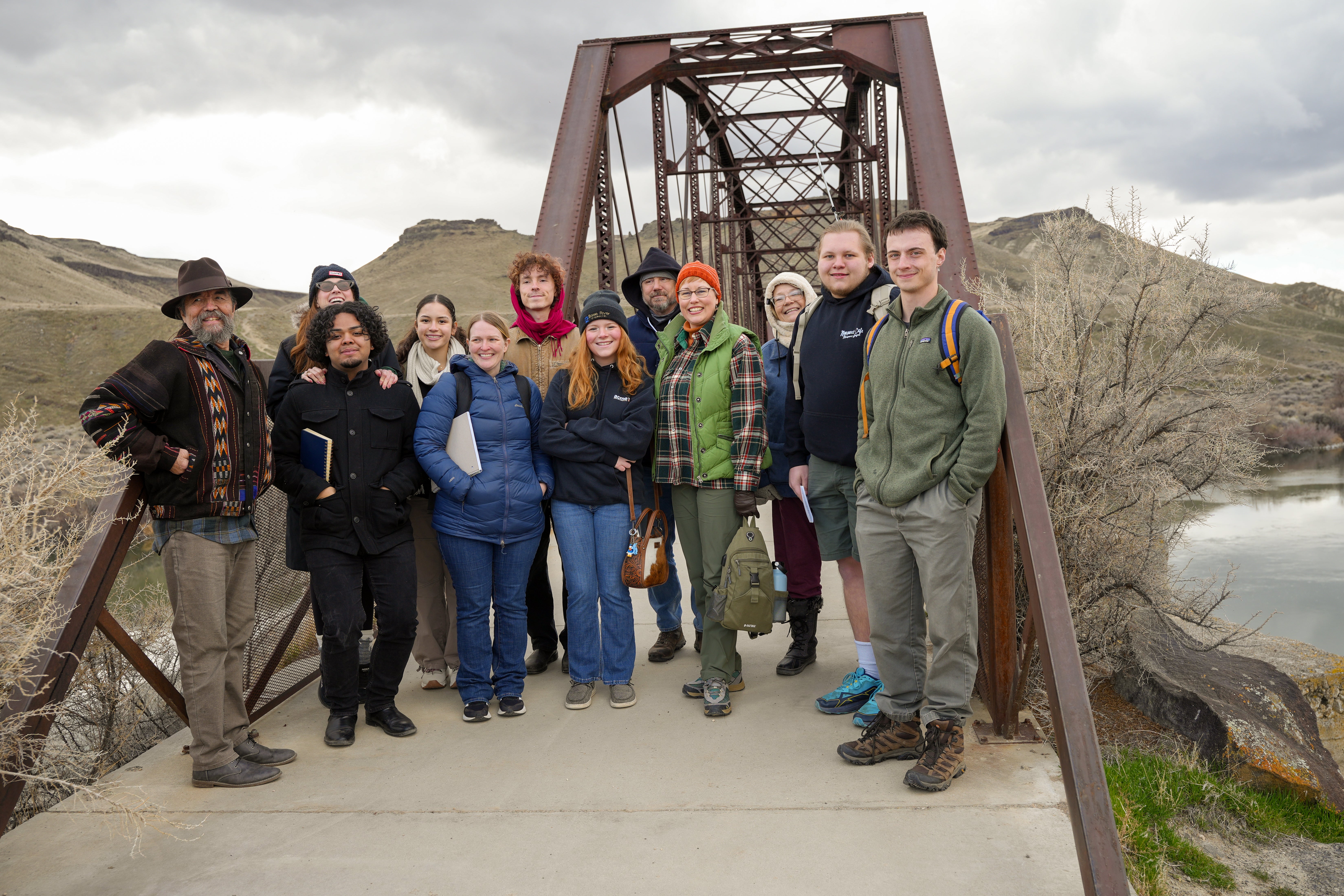
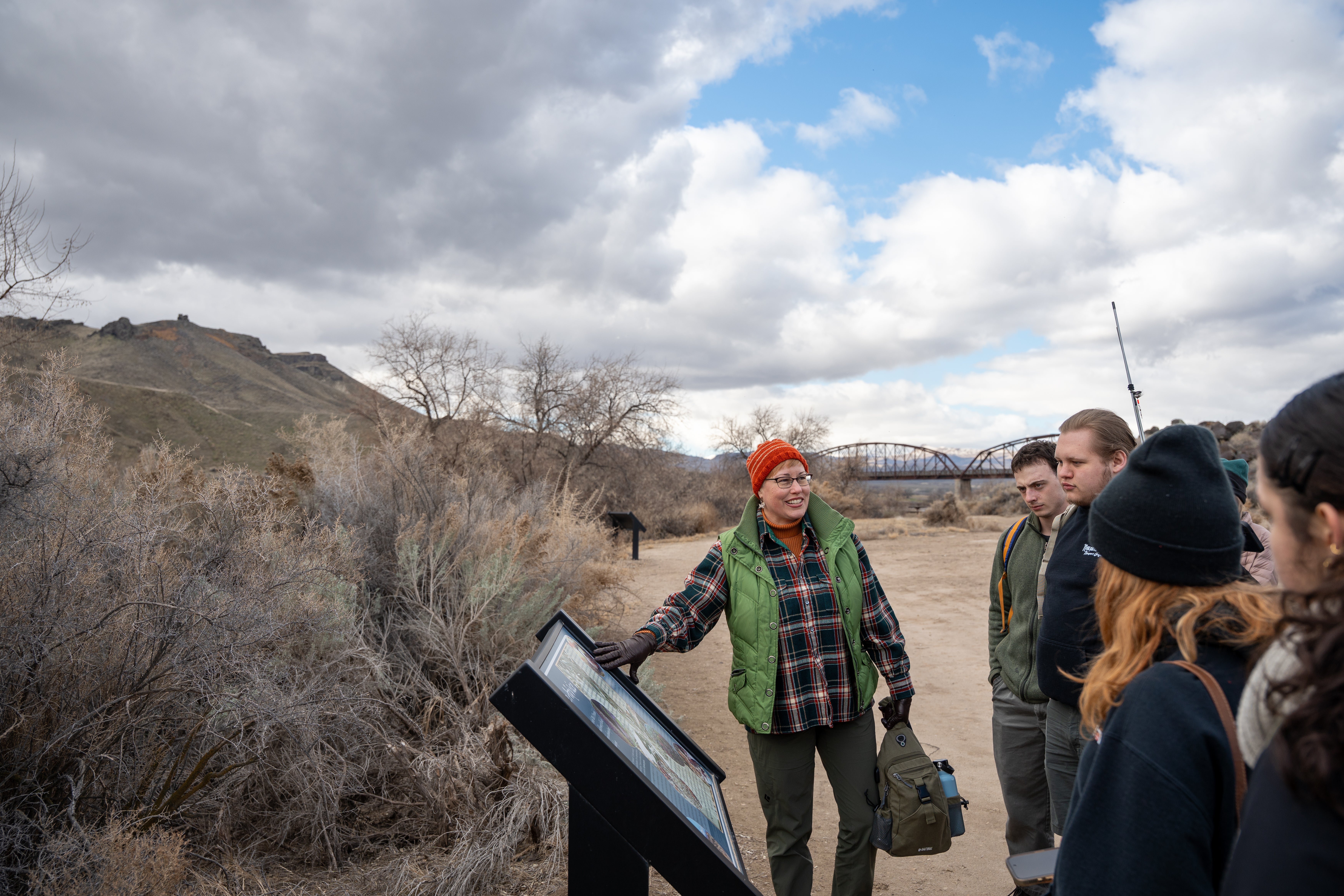
College of Western Idaho (CWI) Anthropology students visited Celebration Park, Idaho’s only archaeology park, located near Melba along the Snake River on Feb. 20.
The field trip is part of the course, Indigenous Peoples of North America (ANTH 220), and is a highlight each semester. According to Anthropology Professor, Nikki Gorrell, Celebration Park preserves a site where Northern Paiute, Western Shoshone, and Bannock peoples overwintered for thousands of years.
“Winter life along the Snake provided your grocery store and hardware store in one fairly protected canyon,” Gorrell said. “Fish, shellfish, waterfowl and their eggs, along with rabbits and deer, provided plenty of food. Important plants such as sagebrush, dogbane, cattail, and tule reed were used to build netting, traps, mats, shelter, and canoes. The Great Basin region also has notable obsidian deposits that were refined into essential tools.”
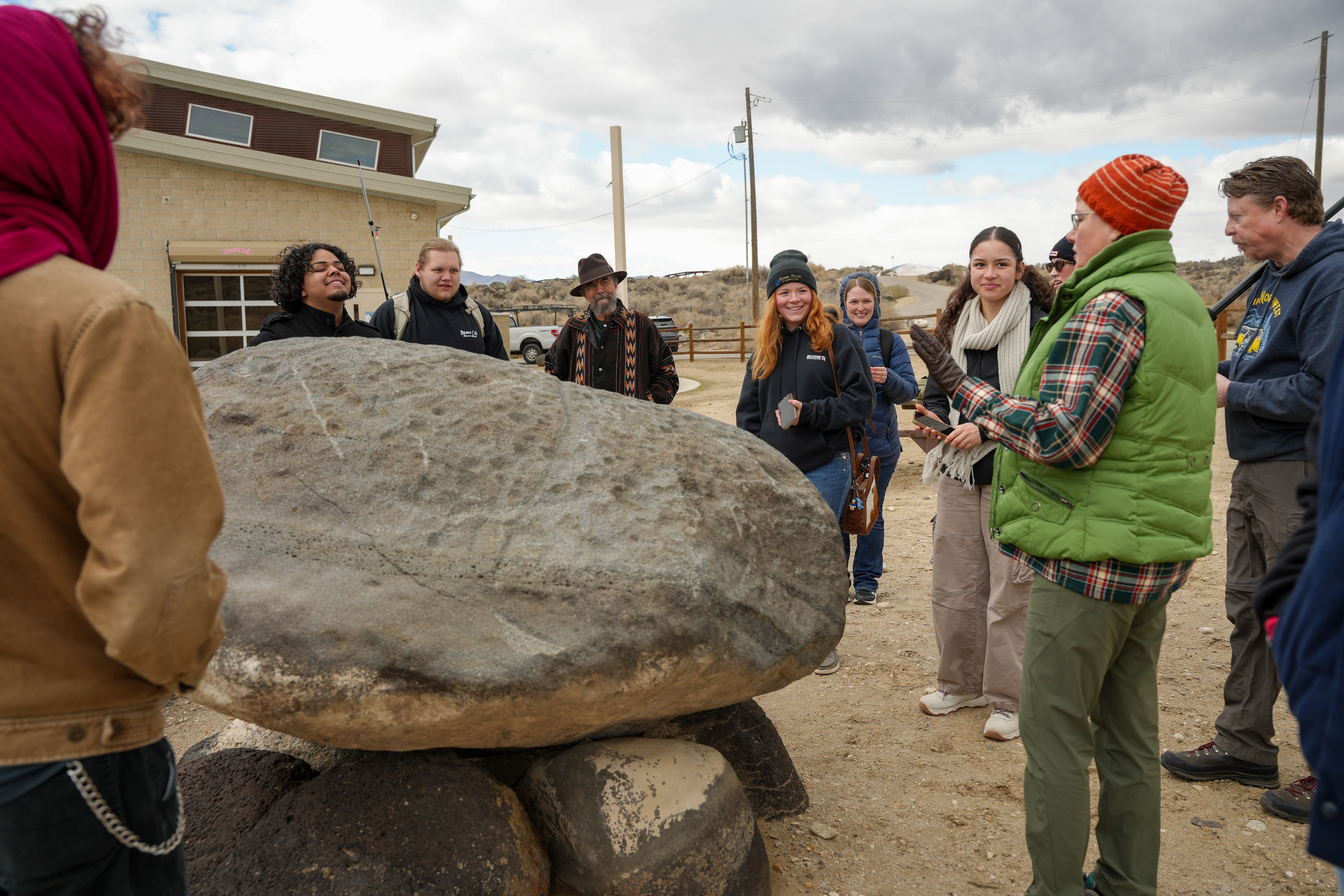
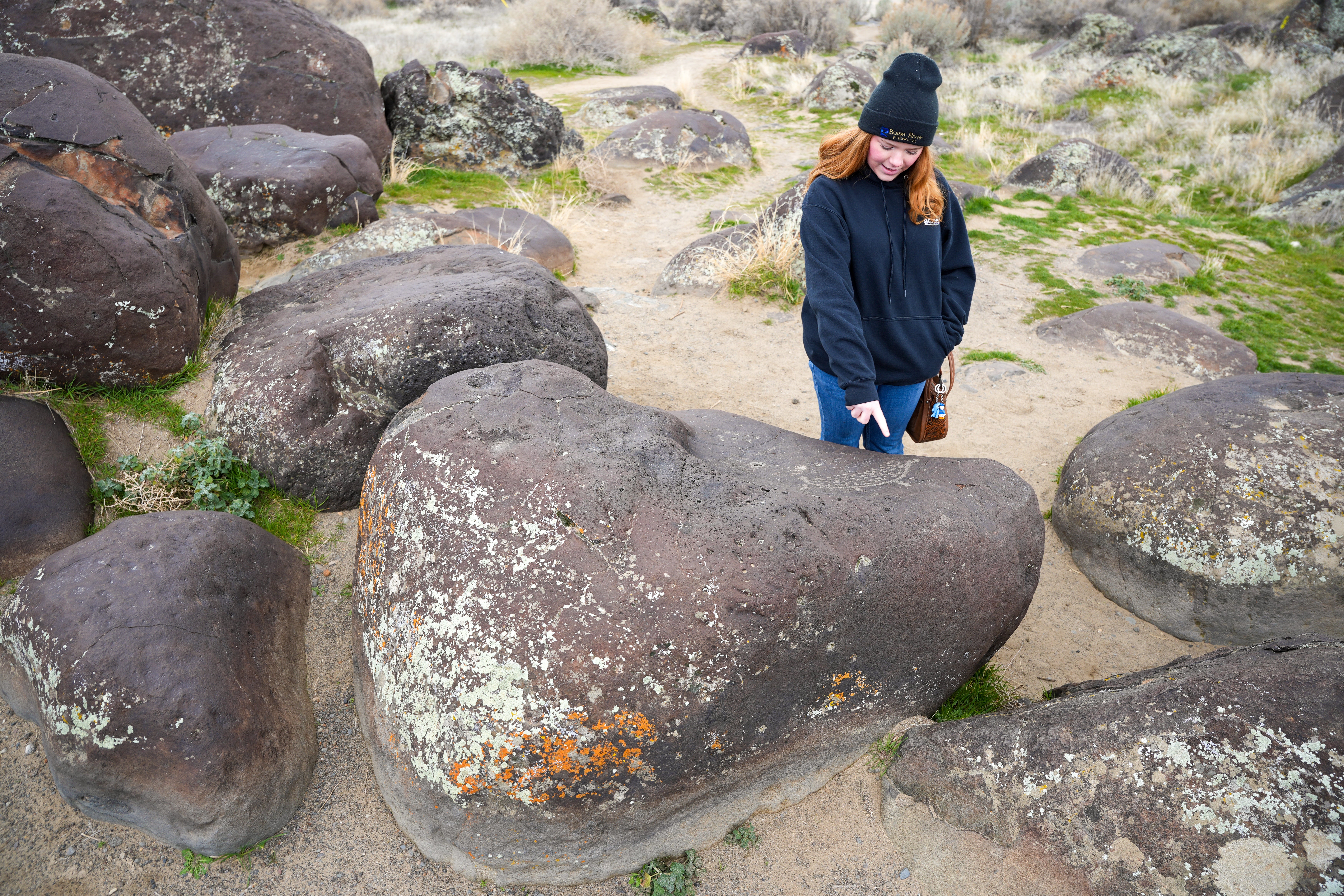
Celebration Park is also known for the petroglyphs that cover the Bonneville melon gravel, large boulders deposited along the river’s edge. While the meanings of these designs remain unknown, Gorrell encourages students to approach them with respect.
“It’s not our role to decipher the petroglyphs, but rather to appreciate that all humans engage in artistic expression for a variety of reasons, some practical and some spiritual,” she said. “The objective in bringing ANTH 220 students to the park is to give them a taste of fieldwork, a key component of anthropology and archaeology.”
For many students, the visit brought classroom discussions to life.
“As Anthropology students, we talk a lot about lived experience; being here helped me better understand Indigenous peoples’ connection to this land in a way a classroom can’t fully capture,” said Anthropology student, Samantha P.
“I really appreciated hearing the parks director discuss the layering of narratives when considering the different people and perspectives that make up the history of Celebration Park,” said Anthropology student, Kellan B.
Students also describe the visit as unforgettable, sharing the experience of standing where Indigenous tribes once lived and learning how the Bonneville Flood carved the canyon made the history feel immediate and real.
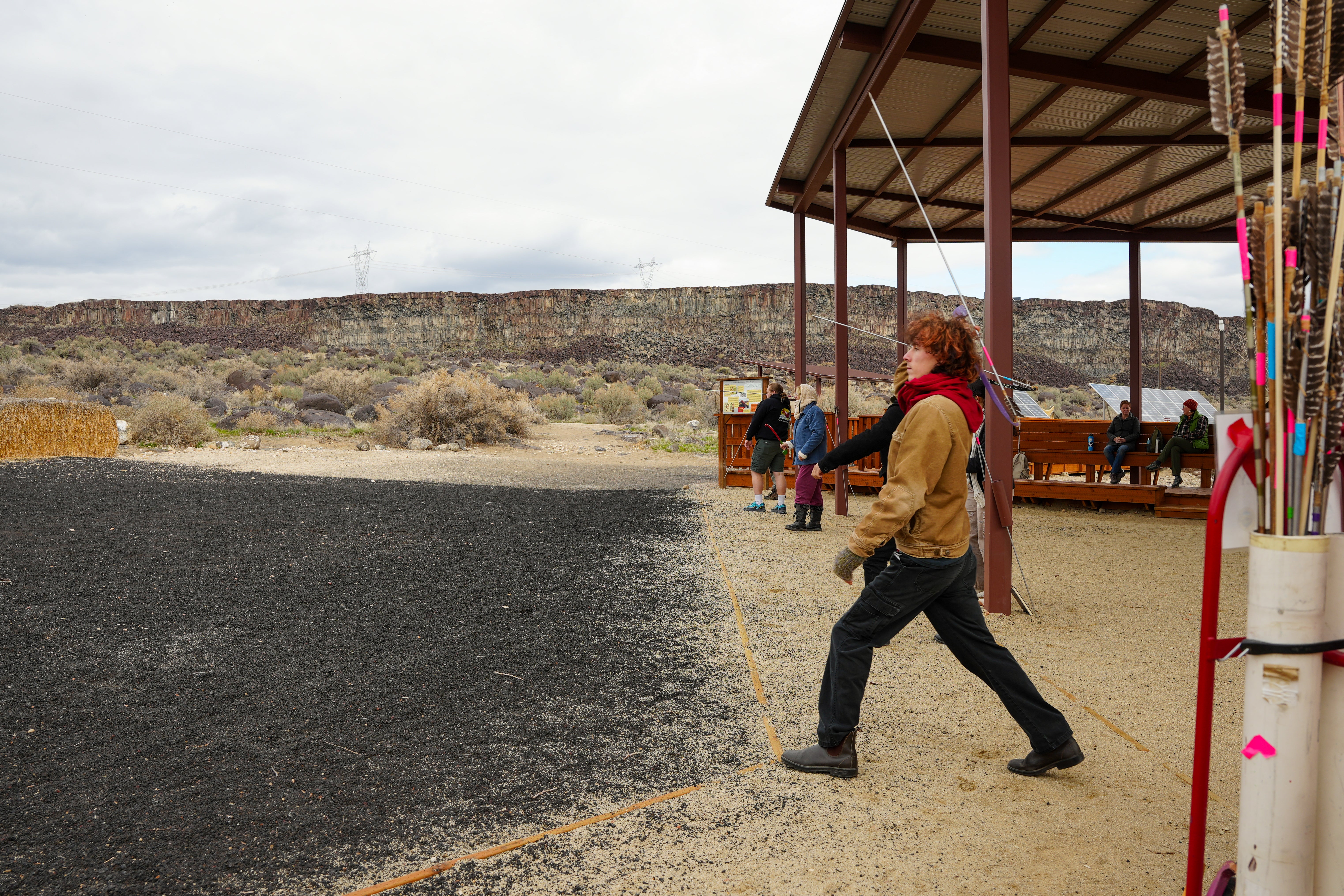
“We learned so much about the Indigenous tribes who once lived right where we were standing,” said Anthropology student, Danelle G. “We saw replicas of their tools, clothing, and shelter, along with the petroglyphs abraded into the immense, rounded boulders. The knowledge of Professor Gorrell and the museum staff made it easy to imagine the life of these resourceful people. Every minute of this experience was fascinating, and one I will never forget.”
CWI’s Anthropology program allows students to explore human diversity and complexity, critically engaging with cultures past and present while understanding the relationship between humans and their environment. Experiences like the Celebration Park field trip give students hands-on opportunities to observe artifacts, landscapes, and cultural sites firsthand. Through fieldwork, research, and immersive learning, students develop analytical, cultural, and leadership skills that prepare them for careers in cultural resource management, education, research, and other fields focused on human societies and their histories.