Campus Development
College of Western Idaho (CWI) is advancing into a new phase of innovative growth and campus establishment. Through a campus visioning and planning process, CWI created a long-term vision to inform campus expansion and drive investment in the College's infrastructure. It is paramount we create high-quality classroom space, ensuring a state-of-the-art learning environment, supporting students and our community. Four key capital projects, described below, are in progress and critical in making that vision a reality.
Join us in Powering the Treasure Valley with affordable, accessible, employable education! Invest in the Future of CWI
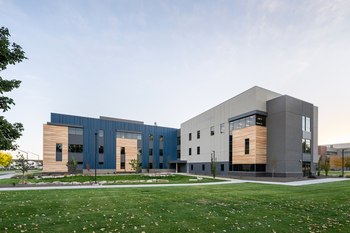
Nampa Campus
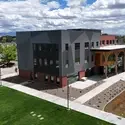
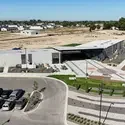
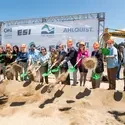
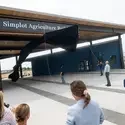
Development of Nampa Campus will consist of a dedicated building for health and sciences, as well as expansion and consolidation of horticulture and agriculture sciences within our main Nampa Campus footprint. In addition, focused student support services and resources will come together to create the Norco CapEd Student Success Center. The College has partnered with ESI and Cushing Terrell for design and construction.
Completed
- Norco Health & Science Building – Opened August 2025
- Agricultural Sciences Complex – Opened August 2025
- CapEd Student Success Center – Opened June 2026
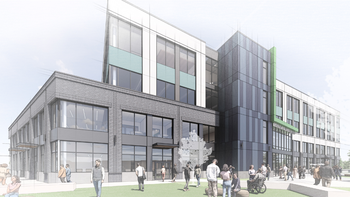
Boise
The Boise location will transition from the Black Eagle Business Park to the corner of Main Street and Whitewater Boulevard, near the Boise River. The College's new Micron Academic Center is adjacent to a vibrant, downtown environment, providing opportunity for students to access high-quality, affordable education leading to employment. The College has partnered with Ahlquist, Hummel Architects, and ESI Construction for design and development of this mixed-use campus.
Estimated COMPLETION
- Micron Academic Center – Fall 2027
Visioning & Planning Process
The College initiated a Campus Visioning and Planning process to inform, guide, and prioritize campus improvements to better serve students and communities. A CWI Planning Team, comprised of a comprehensive representation of internal stakeholders, worked to bring forward a recommendation. Throughout the process, internal and external feedback was gathered to help provide input on immediate development and future growth needs of the College.
The Planning Team’s objective was to provide recommendations to the CWI Board of Trustees and receive approval of strategic direction and priorities for campus development and capital projects. The process included programming priorities, space requirements, campus focus areas, funding sources, and timelines. CWI's guiding principles for strategic campus development are:
- Provide high-value, accessible, and flexible learning, including online programs.
- Maximize the utilization and adaptability of existing learning spaces
- Expand hands-on learning spaces, labs, and market spaces
- Increase spaces for highest job demands, such as health care and STEM.
- Establish convenient spaces for student interaction, study, support, and wellness
- Create spaces for industry networking, apprenticeships, and workforce opportunities
- Provide cohesive campus environments to foster student community and success
From these guiding principles, we focused on incorporating the following key attributes into our design concepts:
Accessible - Flexible - Supportive - Collaborative - Communal - Cohesive
The visioning time frame spanned multiple months and included three phases: assessment, exploration, and application.
CWI Board Approves Campus Visioning Plan
Campus Visioning & Planning Recommendation
Board of Trustees Work Sessions
Campus Visioning Survey
Nearly 1,300 individuals, including internal and external stakeholders, provided input on immediate development and future growth of the College in a Fall 2021 Campus Visioning Survey.
Information collected from the survey assisted the CWI Planning Team, along with Cushing Terrell, a local planning, architecture, and engineering firm, in providing a recommendation to the CWI Board of Trustees regarding programming priorities, space requirements, campus focus areas, funding sources, and timelines.